How to Figure Out Your Interior Design Style Before Remodeling
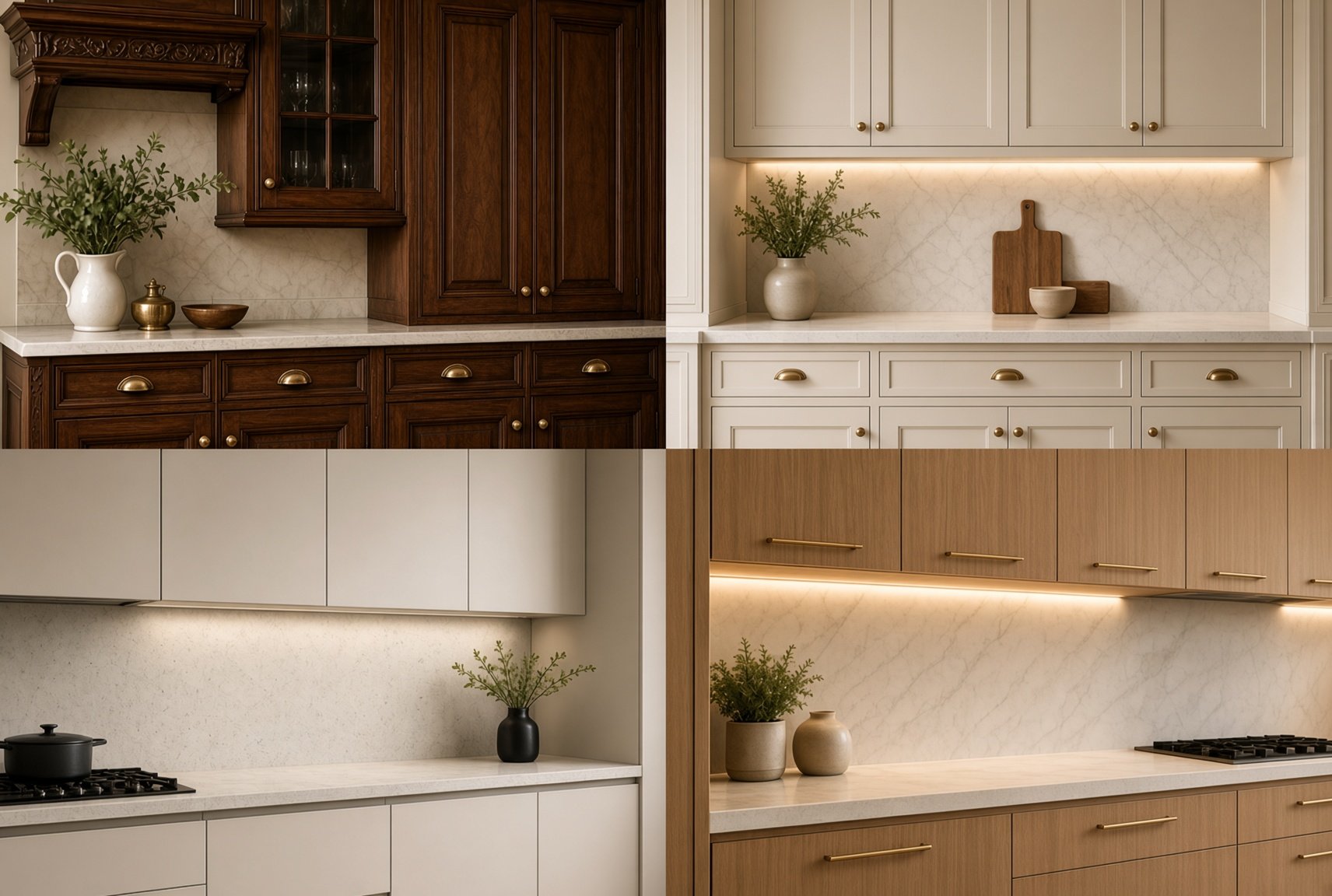
One of the most common sticking points in a kitchen or bathroom remodel isn’t just deciding the budget or the timeline: it’s deciding on style. Homeowners often know what they don’t like more clearly than what they do. Without a clear direction, material selections, cabinet styles, finishes, and overall design decisions become more difficult than they need to be.
Understanding a few core interior design styles, and how they show up in real homes, makes the process much smoother. Here’s a practical guide to the four main design styles we see most often, along with a few digital visual renderings that provide a glimpse into how these different styles look in action.
The Four Main Styles
Traditional
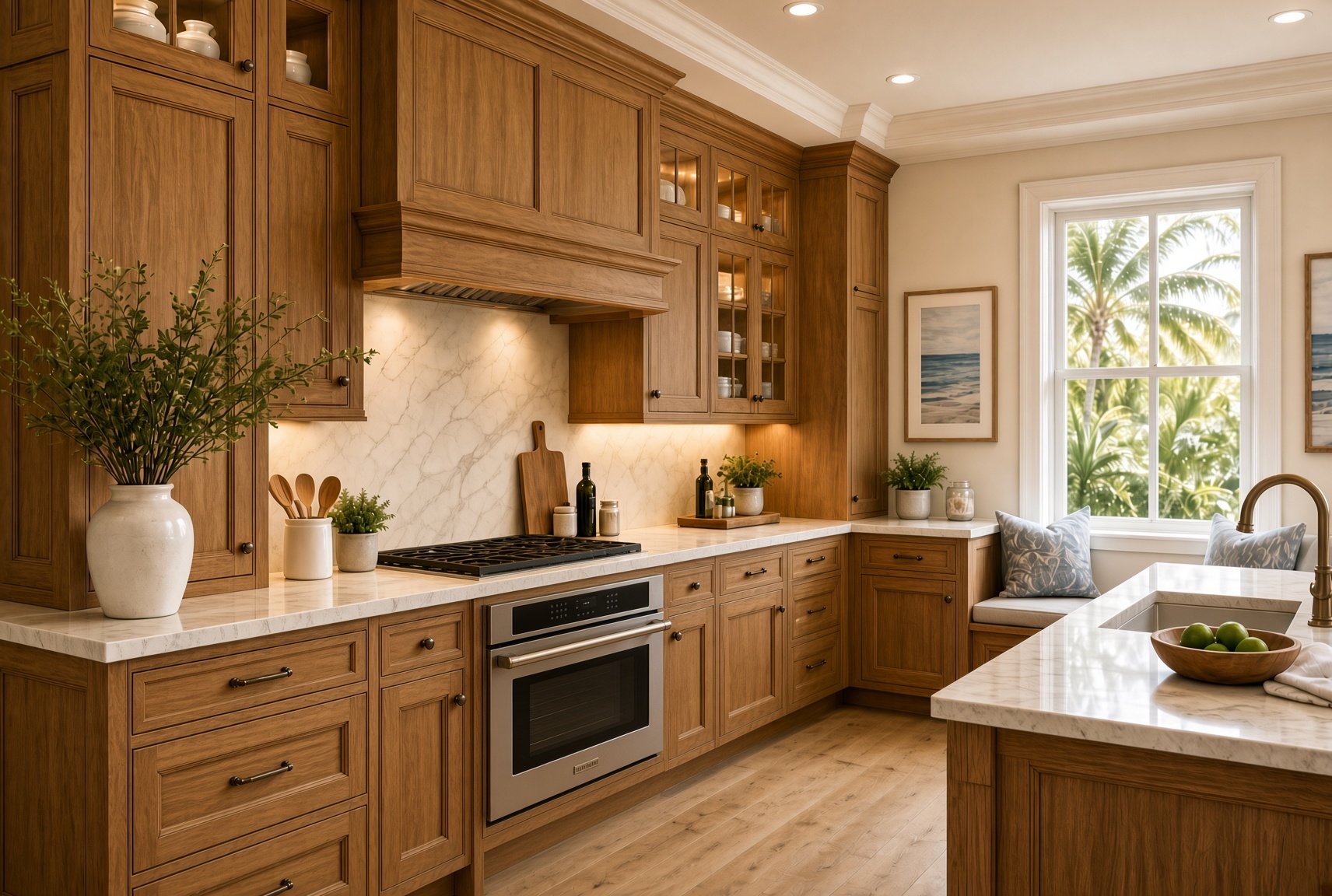
Traditional design draws from classic European and American influences. Raised-panel or detailed cabinet doors, richer wood tones, decorative molding, balanced symmetry, and a sense of permanence. It often feels warm, established, and formal without being cold. In Southwest Florida, traditional style is frequently softened with lighter finishes and cleaner lines so it doesn’t feel heavy in a bright, coastal setting.
Contemporary
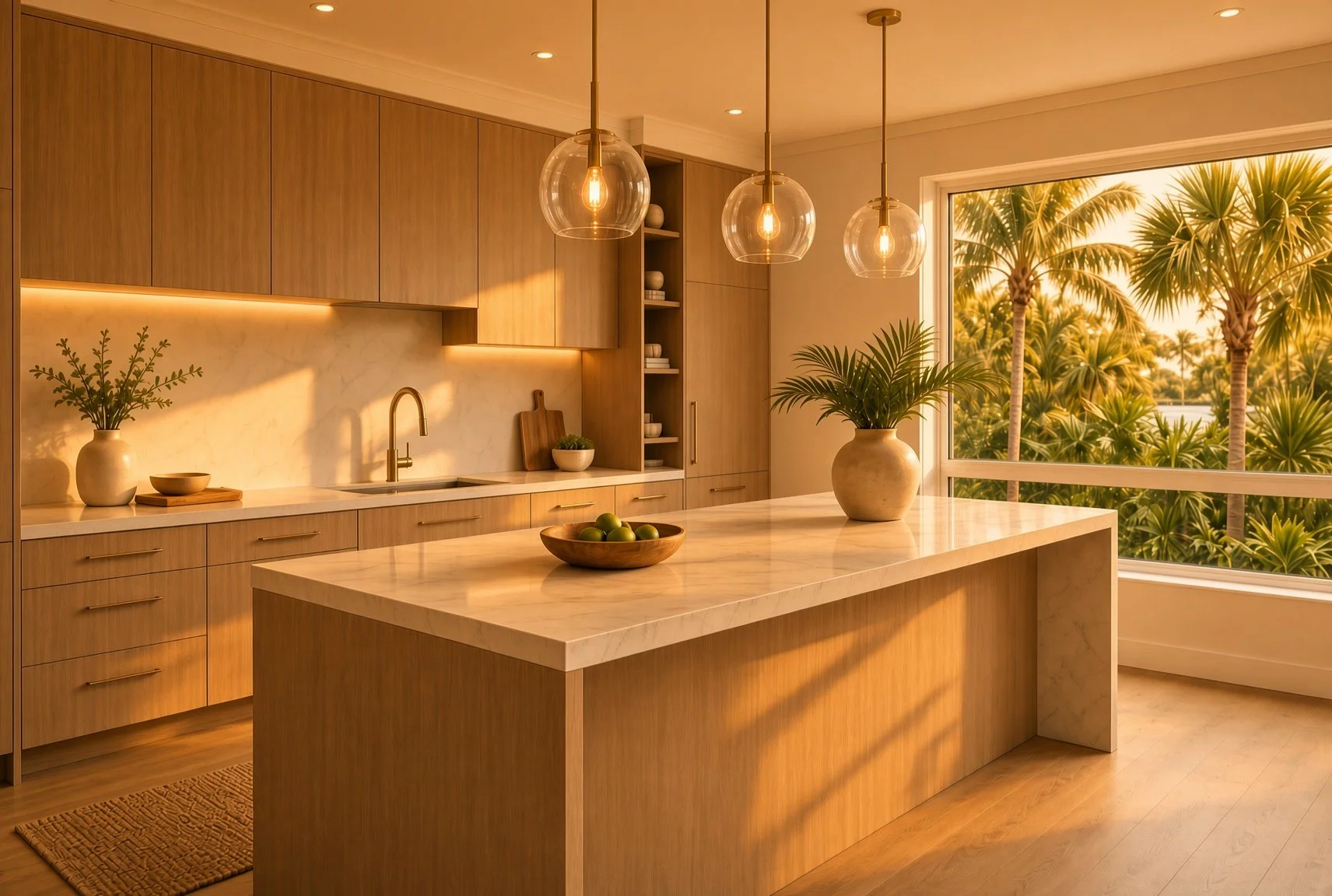
Contemporary design reflects a more current aesthetic. It tends to favor clean lines, minimal ornamentation, mixed materials, and has an airier and lighter feel. Cabinet doors are often flat or lightly detailed, and hardware is simple. Emphasis is placed on open space, natural light, and uncluttered surfaces. Contemporary kitchens and bathrooms in Southwest Florida frequently incorporate warm neutrals and natural textures so the space doesn’t feel stark.
Transitional
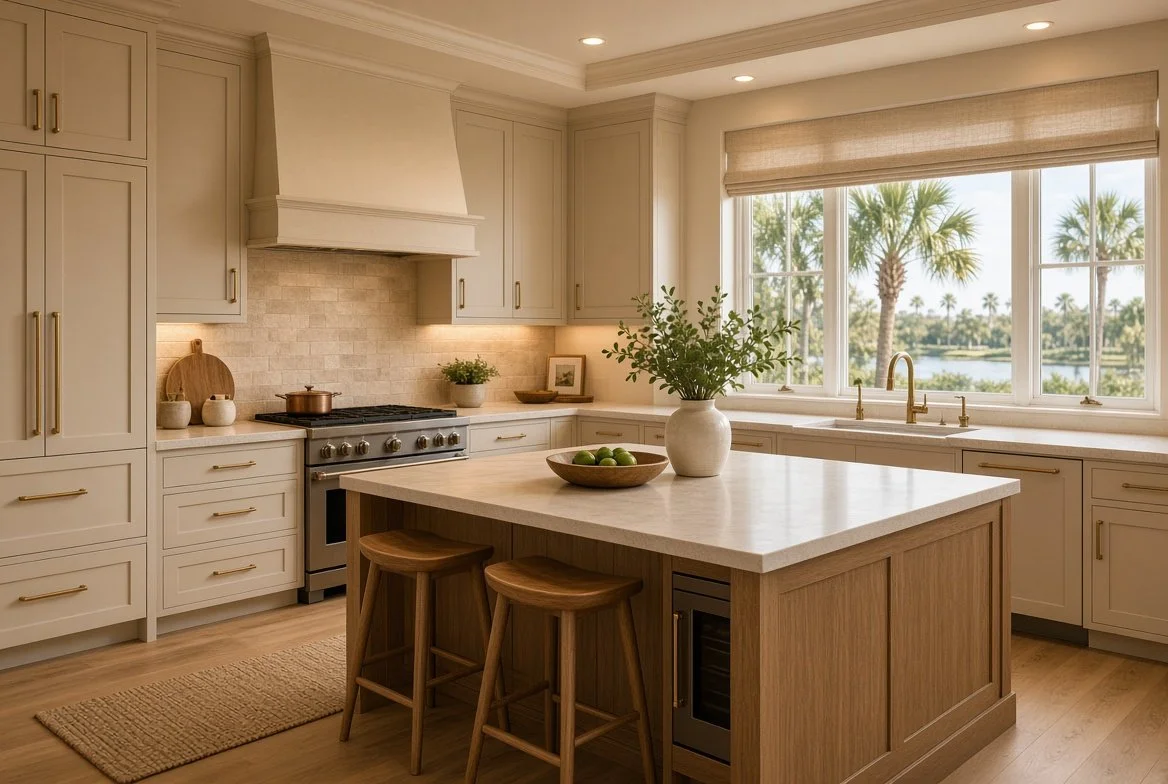
The transitional style sits between traditional and contemporary. It keeps some classic elements (such as shaker-style cabinets or subtle molding), but removes most of the ornate detail. The result feels current and livable while still having a sense of substance. This style is a popular choice for remodels in Fort Myers, Sanibel, and Naples, because it adapts well to both older and newer homes and pairs easily with a range of materials.
Modern
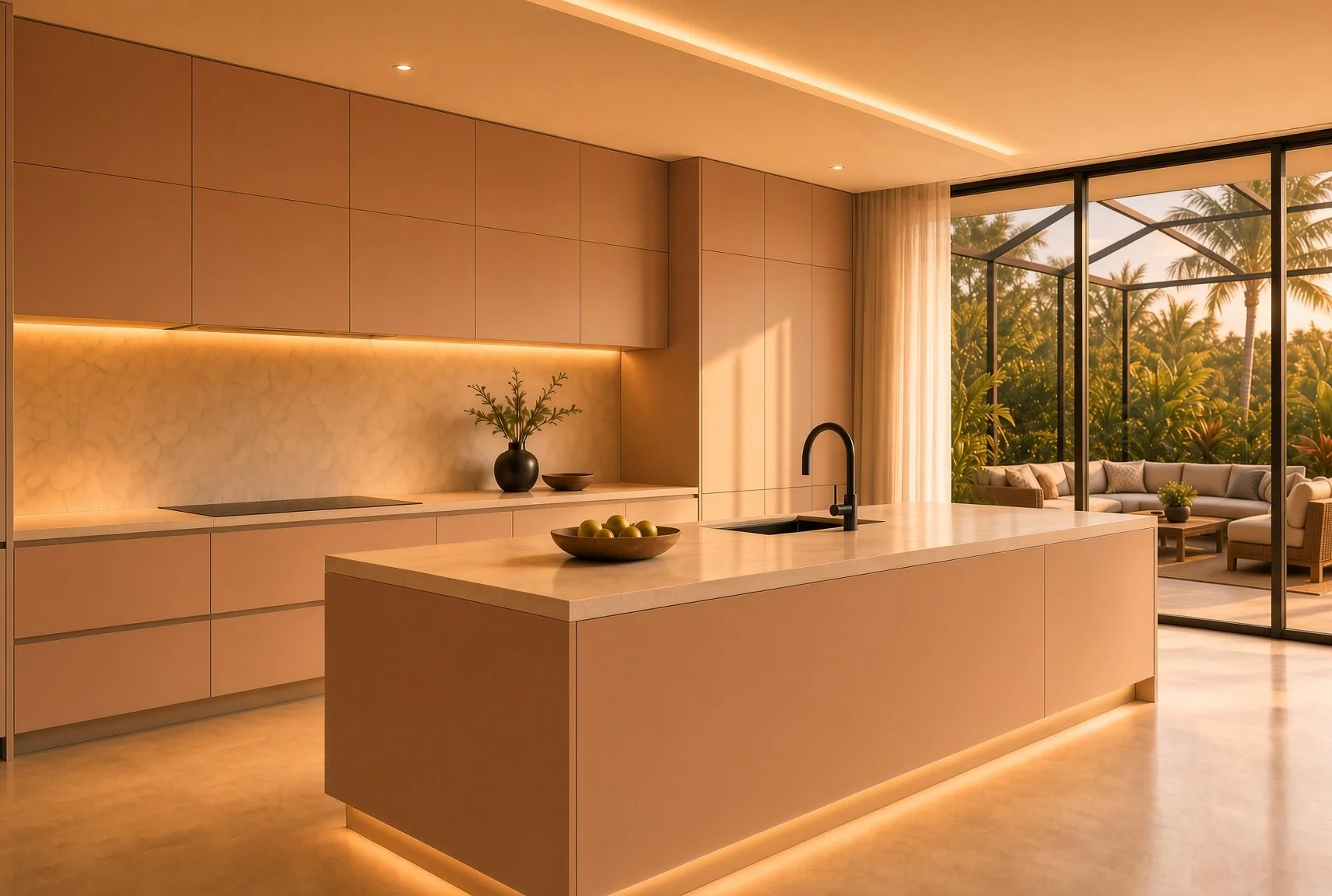
Modern design is more specific than contemporary. It roots itself in early-to-mid 20th century principles: strong geometry, minimal decoration, functional clarity, and an “honest” use of materials. Flat-panel cabinets, handle-less or very simple hardware, open sightlines, and a restrained color palette. When done well, modern spaces feel calm and intentional. When done poorly, they can feel cold or unfinished—especially in a region where people expect a certain amount of warmth.
Visual Energy: Matching Style to the Room
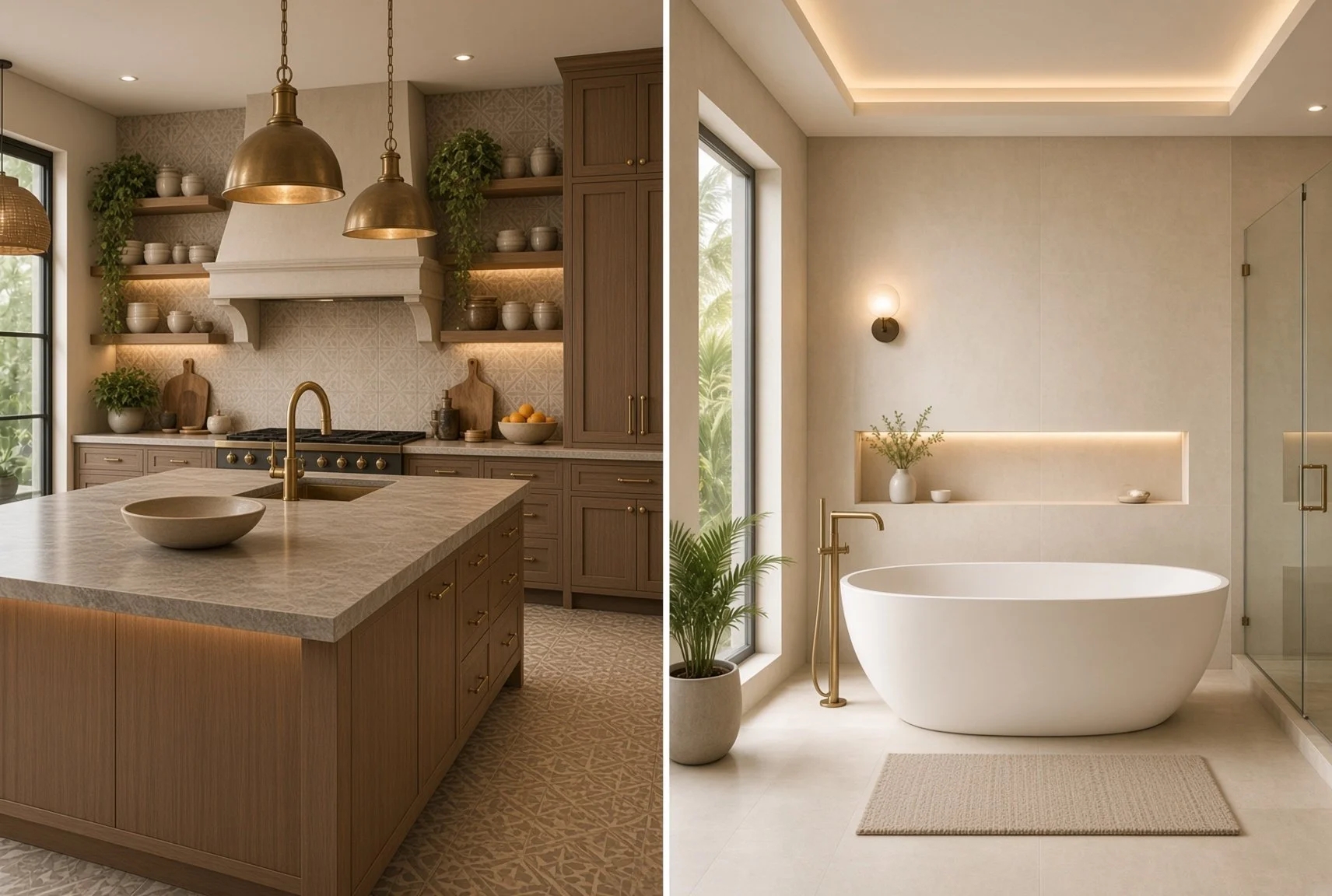
Not every room needs the same level of visual energy.
Kitchens often benefit from moderate to higher visual energy. This is a working space where texture, contrast, and layered materials (cabinets, counters, backsplash, lighting) help the room feel active and inviting.
Primary bathrooms usually work better with lower to moderate visual energy. These spaces are meant for calm and recovery. Too much contrast or detail can make them feel busy rather than restful.
Guest bathrooms and powder rooms can handle higher visual energy. Because they’re used less frequently, they’re good places for bolder tile, darker finishes, or more distinctive design choices.
Open-concept living areas connected to the kitchen need consistency. A high-energy kitchen paired with a very quiet living space (or the reverse) can feel disjointed.
The goal is intentional contrast, not accidental mismatch.
Material Tradeoffs to Consider
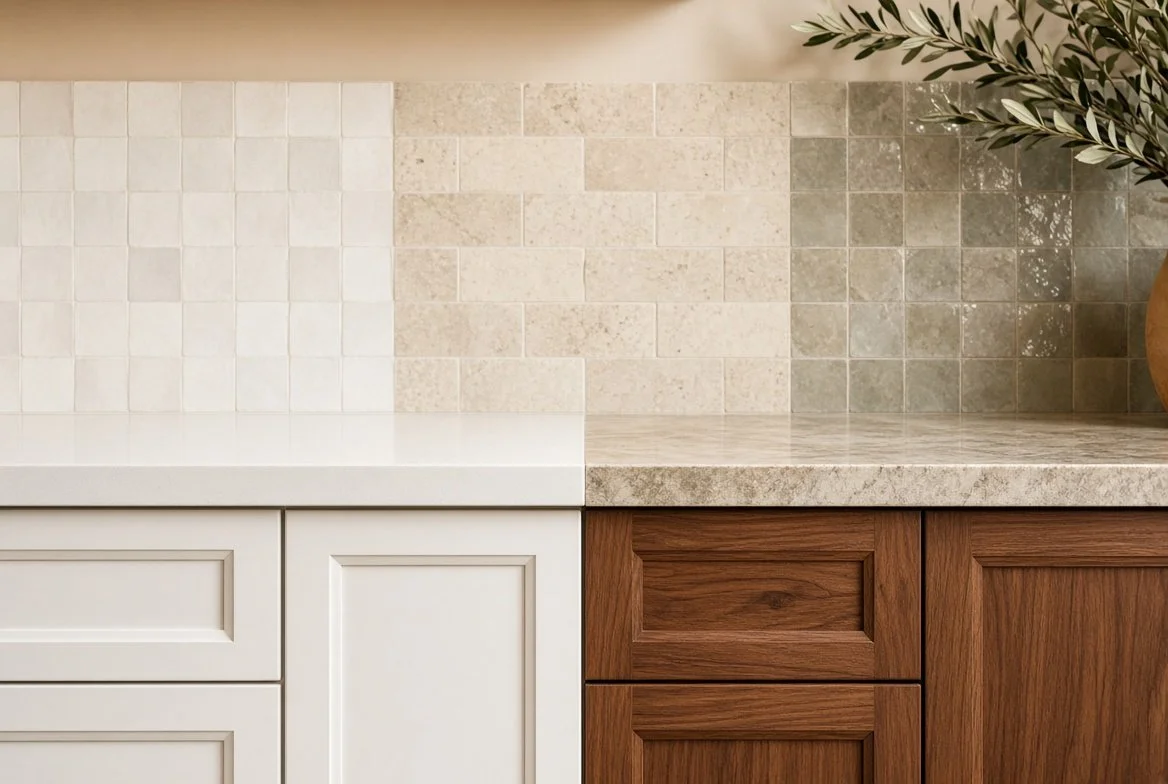
Every material choice involves tradeoffs between appearance, maintenance, cost, and how well it will perform over time in our climate.
Painted cabinets offer flexibility in color and a clean look that works well with contemporary and transitional styles. They require quality preparation and finishes to hold up in humidity.
Stained wood cabinets bring natural warmth and pair beautifully with traditional and transitional designs. Some woods and finishes hold up better than others in humid, sunny conditions.
Quartz countertops deliver consistency, durability, and low maintenance—strong practical advantages in a coastal climate. They work across almost every style.
Natural stone (marble, granite, etc.) provides unique variation and a luxurious feel but comes with more maintenance and potential sensitivity to moisture and staining.
Tile choices dramatically affect visual energy. Large-format, low-contrast tile keeps a space calm. Smaller, more patterned, or higher-contrast tile increases energy and detail.
How to Clarify Your Preferences
A simple way to move forward:
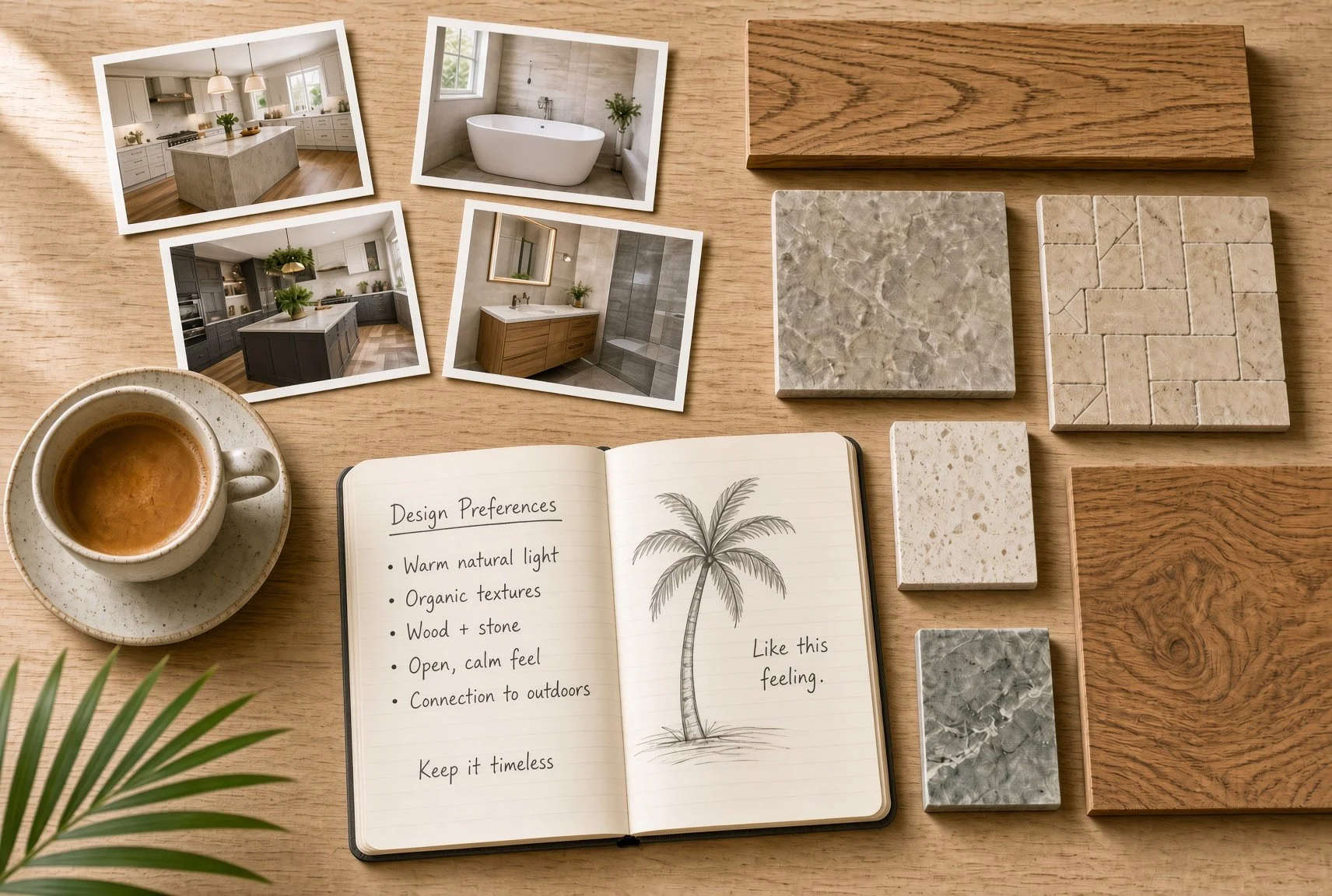
1. Collect images of kitchens or bathrooms you genuinely like (not just ones you think you should like).
2. Look for patterns: Are the cabinet doors flat or detailed? Are the colors warm or cool? Is there a lot of contrast or mostly soft transitions?
3. Notice what you consistently skip or dislike— this is often more revealing than what you pin.
4. Consider how you want the room to feel on a daily basis (calm, energetic, refined, casual).
5. Talk through the practical side early: storage needs, lighting, how the space connects to the rest of the home, and how materials will hold up here.
You also don’t need feel confined by a particular style label. Many of the best remodels blend elements, especially transitional spaces that borrow warmth from traditional design and clarity from contemporary design.
Final Thoughts
Clarity on style doesn’t limit creativity— it speeds up good decisions. When you and your remodeling team share a clear direction, material selections, layout choices, and details fall into place much more naturally. The finished space feels more intentional, and the process itself becomes less stressful.
If you’re planning a kitchen or bathroom remodel in Southwest Florida and want help translating your preferences into a cohesive design, click the button below. We’d love to walk through the process with you!